
About PSBO
Sound Science | Scientific Information | Informed Public
A group of bird banders hatched the idea during long volunteer hours banding birds at monitoring sites. Founded in 2008 as a 501(c)(3) organization, PSBO united existing projects, teams, and trainers dedicated to bird research in the Puget Sound.
Our vision grew to encompass an organization that identifies gaps in our knowledge about local birds, mobilizes and trains people to collect data to address the gaps, and provides the results both to the general public and to land managers.
We envision an organization that can bridge the space between the resource management and monitoring efforts of the state government, the research efforts of our academic institutions, the public outreach of our Audubon Societies, and a motivated birding public. This concept evolved into our motto, "Sound science. Scientific information". Informed public.
Our
Team
-
Allison Anholt
-
Charlie Wright
-
Claire Stuyck
-
Julie Smith
The PSBO Board of Directors

Donald Norman
VICE-PRESIDENT
Don is a wildlife biologist with decades of hands-on experience studying and protecting birds and their habitats. His work blends careful field monitoring with a deep understanding of how landscapes, wildlife, and people interact - especially in the Pacific Northwest. Don has been involved in a wide range of conservation projects, from helping protect priority bird species identified by the Washington Department of Fish and Wildlife, to working on wildlife and habitat solutions in urban areas.
Deeply connected to the conservation community, Don is an active member of many environmental organizations and collaborates closely with fellow scientists, land managers, and conservationists. He is also involved in habitat restoration efforts, is a federally licensed Master Bander, and owns his own native-plant nursery.
Don has operated a long-running Monitoring Avian Productivity and Survivorship (MAPS) bird-banding station in the Fort Lewis area since 1996, and has led a Breeding Bird Survey route on Washington’s outer coast since 1993. He regularly teaches Breeding Bird Survey and Banding courses, sharing his knowledge with the next generation of birders and conservationists. Don is also a founder of the Puget Sound Bird Observatory, reflecting his long-standing commitment to bird research, education, and conservation.

Cindy has been a dedicated member of the Puget Sound Bird Observatory’s Board since 2010, serving as both Secretary and Treasurer. She is passionate about involving community scientists in meaningful projects that help document and monitor local bird populations and wildlife habitats.
Cindy plays a leading role in several PSBO monitoring efforts, including managing the Wintering Fox Sparrow Habitat Study and co-managing the Secretive Wetland Bird Monitoring project. Over the years, she has contributed to a wide range of bird surveys and conservation programs, from Breeding Bird Surveys, Audubon’s Sagebrush and Songbird surveys, and shorebird counts, to monitoring Vaux’s Swifts and helping lead annual Christmas Bird Counts in her region.
She is also actively involved in bird banding and training, supporting PSBO’s long-running MAPS station at Morse Reserve and assisting with workshops focused on bird identification, banding skills, and survey techniques. Cindy is deeply curious about birds - their behaviors, habitats, and needs - and takes great joy in sharing that curiosity with others. Mentoring and encouraging community scientists is one of the most rewarding parts of her work.
Cindy holds an intergrated Bachelor of Arts and Science degree with a focus on Wetland Science from the University of Washington. Her background includes specialized training in wetland assessment, plant identification, and oiled wildlife care, reflecting her strong commitment to habitat conservation and wildlife protection.
Adrian is a conservation biologist with more than 30 years of experience working to protect threatened and endangered habitats and the wildlife that depend on them. He earned his master’s degree from The Evergreen State College, where his research explored how birds use epiphytes in old-growth conifer forests—an early focus that continues to shape his work today.
Adrian has extensive hands-on experience studying and handling birds through ecological research, including long-term demographic studies of threatened and endangered species. He established the Monitoring Avian Productivity and Survivorship (MAPS) bird-banding station at Glacial Heritage Preserve in 2013 and has coordinated multiple bird banding training programs to build skills and capacity within the conservation community.
Currently, Adrian serves as Stewardship Director at Great Peninsula Conservancy, where he oversees the care and management of more than 140 land trust conservation properties across Kitsap, Pierce, and Mason counties. His work centers on maintaining and improving the ecological health of these natural ecosystems for wildlife and future generations.
Adrian is also the founder of 'Listen Up', a collaborative program designed to improve the long-term survival of forest birds in western Washington. The program combines innovative habitat improvement practices with acoustic monitoring of bird responses to better understand how birds respond to conservation actions, and shares results and methods widely through outreach and public communication. Listen Up is a partnership among land trusts, conservation and tribal organizations, with support from the Cornell Lab of Ornithology’s Land Trust Bird Conservation Initiative. Adrian and the program have been featured nationally, including in The New York Times “50 States, 50 Fixes” series and on NPR’s All Things Considered.

Glenn Johnson
BOARD MEMBER
Glenn developed an early love of birds and the natural world while growing up in the southern Willamette Valley in Oregon. That interest deepened during his studies at the Evergreen State College in Olympia, where he studied ornithology under Dr. Steven Herman.
Over the years, Glenn has monitored and banded birds across 11 western states and Mexico, and played a key role in establishing the Klamath Bird Observatory, becoming its first employee when the organization became a formal nonprofit. He later earned a Master of Science degree from the University of Arizona, where his research explored how beavers shape desert riparian habitats and the bird communities that depend on them. Along the way, he has also helped develop education and training programs designed to engage and support diverse communities.
Glenn has banded and overseen the banding of over 20,000 birds and holds both bander- and trainer-level certifications from the North American Banding Council. He brings extensive field experience and a strong commitment to rigorous, ethical research.
Currently, Glenn is a riparian habitat program manager with Pierce Conservation District, partnering with private landowners, government agencies, non-profits, and Native American tribes to improve habitat conditions for salmon and other wildlife. His prior work includes monitoring marine mammals and Marbled Murrelets in Puget Sound and Alaska, designing and implementing bird and wildlife surveys, conducting environmental studies to support federal agencies, and a variety of other natural resource projects aimed at conserving wildlife and habitats across the Pacific Northwest.
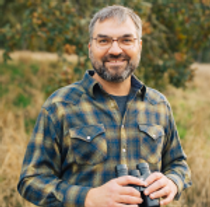
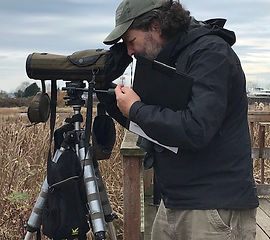
Scott Markowitz
DIRECTOR OF RESEARCH
Scott is an avid birder, researcher, and educator with a lifelong fascination for birds and the science behind them. His interests span everything from the process of feather molt in songbirds to large-scale conservation and habitat restoration—an enthusiasm that has earned him a well-deserved reputation as a dedicated “bird nerd.”
Scott discovered birding more than 30 years ago and quickly fell in love with it, spending countless hours studying field guides and searching for new species and rarities. His passion has taken him birding across North, Central, and South America, Europe, Asia, Africa, and throughout the Pacific and Atlantic regions.
Research is at the heart of Scott’s work today. He began bird banding in England, where he earned his ringing license from the British Trust for Ornithology and contributed to research on species such as Bank Swallows (Sand Martins), gulls, Eurasian Coot, and other waterfowl, as well as studies on how vegetation management affects migratory Acrocephalus (Reed/Marsh) warblers.
Since returning to the United States, Scott has focused on improving bird-banding techniques, developing new methods to more accurately age and sex several songbird species using feather wear and morphology. He is also exploring innovative photographic approaches to better document color in feather wear and soft-part development, and has a growing interest in Song Sparrow dispersal and habitat use based on song acquisition.
Scott holds a Master Bird Banding Permit and currently coordinates Puget Sound Bird Observatory’s Monitoring Avian Productivity and Survivorship (MAPS) stations at Morse Reserve and Glacial Heritage Preserve. He is also building a tiered training program to support and mentor the next generation of bird banders in the region.

Linda Whipple
COMMUNICATIONS CHAIR
Linda brings a background in communications and fundraising, with professional experience at schools and colleges in Pennsylvania before relocating to the Pacific Northwest in 2020. She holds both bachelor’s and master’s degrees in liberal arts and has a long-standing interest in connecting people with information, ideas, and causes that matter.
An avid birder, Linda is passionate about civic action and the role community science plays in advancing research and conserving the natural world. She contributes to bird monitoring and conservation efforts through the Puget Sound Bird Observatory and the Salish Sea Guillemot Network and also serves as a guest interpreter at Point Defiance Zoo, helping visitors better understand and appreciate wildlife.
Linda is an active member of several environmental and outdoor organizations, including the Citizens’ Climate Lobby, Tahoma Bird Alliance, the Washington Ornithological Society, and The Mountaineers. When she’s not birding, she enjoys sea kayaking, wine blogging, and reading - often inspired by the landscapes and wildlife of the Pacific Northwest.